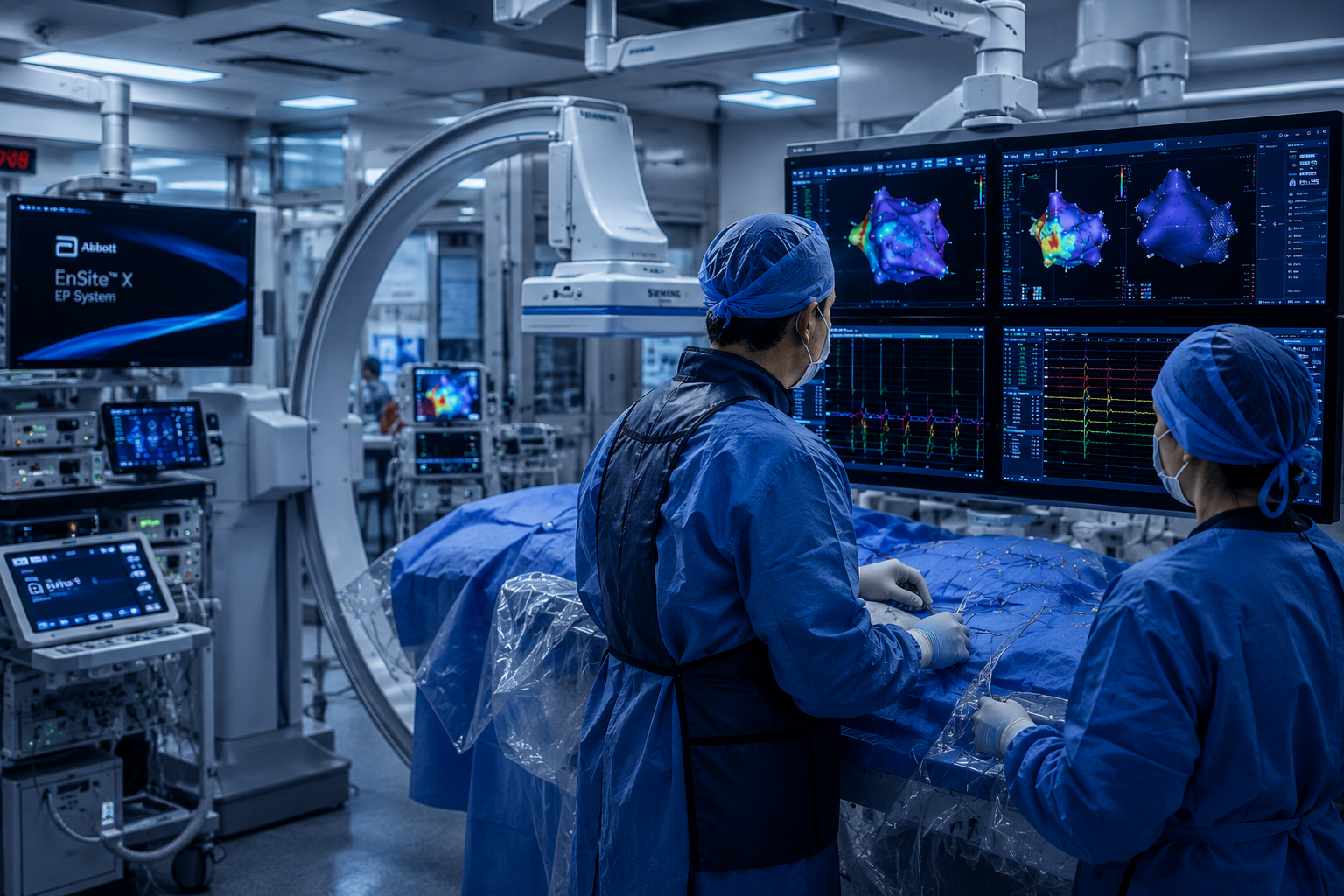
Advancing Cardiac Rhythm Management
Electrophysiology
Clinical Excellence • Operational Leadership • Innovation
Electrophysiology continues to transform the treatment of cardiac rhythm disorders through advances in mapping technology, catheter ablation, cardiac implantable electronic devices, and minimally invasive therapies. Delivering exceptional electrophysiology care requires more than technical expertise—it depends on seamless collaboration between physicians, nurses, technologists, anesthesia providers, and the multidisciplinary teams that support every patient throughout their care.
Throughout my career, I have been committed to building electrophysiology programs that emphasize clinical excellence, operational efficiency, patient safety, and continuous innovation. By fostering physician collaboration, optimizing workflows, supporting professional development, and embracing emerging technologies, I strive to create high-performing programs capable of delivering outstanding outcomes while adapting to the rapidly evolving field of cardiac electrophysiology.
-
Over more than three decades in cardiovascular medicine, I have supported comprehensive electrophysiology programs encompassing complex catheter ablation, cardiac implantable electronic devices, lead management, left atrial appendage occlusion, and advanced cardiac rhythm management. My experience includes radiofrequency (RF), cryoballoon, and pulsed field ablation (PFA), three-dimensional electroanatomic mapping, intracardiac echocardiography (ICE), conduction system pacing, and collaborative physician-led care. Beyond procedural expertise, I focus on developing high-performing electrophysiology programs through operational excellence, multidisciplinary collaboration, quality improvement, and strategic program development that delivers exceptional outcomes for patients and healthcare organizations.
-
Atrial fibrillation is the most common sustained cardiac arrhythmia and one of the fastest-growing areas within electrophysiology. Successful atrial fibrillation programs require advanced technology, coordinated multidisciplinary care, standardized clinical pathways, and continuous adaptation to emerging therapies. My experience includes supporting comprehensive atrial fibrillation ablation programs utilizing radiofrequency (RF), cryoballoon, and pulsed field ablation (PFA), while partnering closely with physicians to optimize procedural efficiency, patient safety, and long-term clinical outcomes. Through operational leadership, quality improvement, and strategic program development, I have helped build atrial fibrillation programs that remain innovative, efficient, and focused on delivering exceptional rhythm care.
-
Beyond atrial fibrillation, modern electrophysiology programs manage a diverse range of complex cardiac arrhythmias requiring advanced mapping, clinical expertise, and highly coordinated procedural care. My experience includes supporting complex catheter ablation programs treating atrial flutter, atrial tachycardia, accessory pathways, premature ventricular contractions (PVCs), ventricular tachycardia, and other challenging arrhythmias through physician collaboration, advanced electroanatomic mapping, and evidence-based clinical practice. By emphasizing standardized workflows, multidisciplinary teamwork, and operational excellence, I have helped develop programs that improve procedural efficiency, patient safety, and durable long-term outcomes.
-
Effective management of supraventricular tachycardia requires precise diagnosis, advanced mapping capabilities, and efficient procedural workflows. My experience includes supporting catheter ablation of atrioventricular nodal reentrant tachycardia (AVNRT), atrioventricular reentrant tachycardia (AVRT), accessory pathways, focal atrial tachycardia, and typical and atypical atrial flutter. By combining advanced technology with standardized clinical processes and close physician collaboration, I have helped create electrophysiology programs that deliver safe, efficient, and highly successful treatment for patients with supraventricular arrhythmias.
-
Ventricular tachycardia represents one of the most complex and high-acuity areas of electrophysiology, demanding advanced procedural planning, sophisticated mapping technologies, and seamless multidisciplinary collaboration. My experience includes supporting ventricular tachycardia ablation for both ischemic and non-ischemic substrates, working alongside electrophysiologists utilizing advanced electroanatomic mapping, intracardiac echocardiography, and evolving ablation technologies. Through strong operational leadership, standardized workflows, and a focus on patient safety, I have helped support programs capable of delivering efficient, high-quality care for patients with complex ventricular arrhythmias.
-
Cardiac implantable electronic devices play a vital role in the diagnosis and treatment of patients with rhythm disorders, heart failure, and sudden cardiac death risk. My experience includes supporting comprehensive device programs encompassing permanent pacemakers, implantable cardioverter-defibrillators (ICDs), cardiac resynchronization therapy (CRT), conduction system pacing, implantable loop recorders, and generator replacements. Through physician collaboration, standardized clinical workflows, and operational oversight, I have helped support device programs that emphasize procedural quality, patient safety, long-term device management, and the successful integration of evolving pacing technologies.
-
As cardiac device utilization continues to grow, effective lead management has become an increasingly important component of comprehensive electrophysiology care. My experience includes supporting programs performing lead revisions, lead extractions, system upgrades, and the management of device-related infections through close collaboration with electrophysiologists, cardiothoracic surgeons, anesthesia, and multidisciplinary care teams. By emphasizing procedural planning, standardized workflows, and patient safety, I have helped support programs capable of managing both routine and high-complexity lead procedures while maintaining the highest standards of clinical excellence.
-
Left atrial appendage occlusion has become an important treatment option for patients with non-valvular atrial fibrillation who are at increased risk of stroke and are not ideal candidates for long-term anticoagulation. My experience includes supporting comprehensive left atrial appendage occlusion programs, including Watchman procedures, through close collaboration with electrophysiologists, structural heart teams, anesthesia, imaging specialists, and multidisciplinary care providers. By integrating standardized patient pathways, procedural efficiency, and coordinated post-procedure follow-up, I have helped support programs focused on delivering safe, evidence-based care while improving long-term patient outcomes.
-
Modern electrophysiology depends on advanced imaging and three-dimensional mapping technologies to improve procedural precision, reduce fluoroscopy exposure, and successfully treat increasingly complex arrhythmias. My experience includes supporting electrophysiology programs utilizing contemporary electroanatomic mapping platforms, intracardiac echocardiography (ICE), fluoroscopic imaging, and the integration of multimodality imaging to guide complex catheter ablation procedures. Through close collaboration with physicians and clinical teams, I have helped implement workflows that maximize procedural efficiency, enhance patient safety, and support the adoption of emerging mapping and imaging technologies.
-
Exceptional electrophysiology programs are built on more than clinical expertise—they require strong operational leadership, efficient workflows, strategic planning, and a culture of continuous improvement. My experience includes developing programs that enhance procedural throughput, optimize scheduling, improve resource utilization, support regulatory compliance, and strengthen collaboration among physicians, nursing, technologists, anesthesia, and ancillary departments. By combining operational discipline with a patient-centered approach, I have helped create sustainable electrophysiology programs that consistently deliver high-quality care while adapting to the evolving demands of modern cardiovascular medicine.
-
The long-term success of any electrophysiology program depends on developing knowledgeable, confident, and highly engaged clinical teams. Throughout my career, I have been committed to fostering a culture of continuous learning by supporting physician education, mentoring nurses and cardiovascular technologists, facilitating new technology adoption, and promoting professional growth across the electrophysiology service line. By emphasizing collaboration, competency development, and evidence-based practice, I have helped strengthen team performance while preparing clinical staff to successfully adapt to the rapidly evolving field of cardiac rhythm management.
-
Electrophysiology continues to evolve at an extraordinary pace, driven by advances in catheter technology, three-dimensional mapping, imaging, artificial intelligence, remote monitoring, and data-driven clinical decision making. I believe successful programs are those that embrace innovation while maintaining an unwavering commitment to quality, patient safety, and operational excellence. By fostering a culture of continuous improvement, evaluating emerging technologies thoughtfully, and investing in the development of multidisciplinary teams, I strive to help build electrophysiology programs that remain adaptable, forward-thinking, and prepared to meet the future of cardiac rhythm care.
-
As electrophysiology continues to redefine the treatment of cardiac rhythm disorders, I remain committed to advancing programs that combine clinical excellence, operational leadership, and a culture of innovation. By building strong physician partnerships, investing in multidisciplinary team development, embracing emerging technologies, and maintaining an unwavering focus on quality and patient outcomes, I strive to help shape the next generation of electrophysiology programs. My goal is not only to support today's standards of care, but to help create sustainable, forward-looking programs that continue to improve the lives of patients for years to come.
Professional Resources
Explore current clinical guidelines, professional societies, and educational resources related to cardiac electrophysiology.