Leadership & Program Development
Building High-Performing Cardiovascular Programs
Developing sustainable cardiovascular service lines through strategic leadership, physician collaboration, operational excellence, and a culture of continuous improvement.
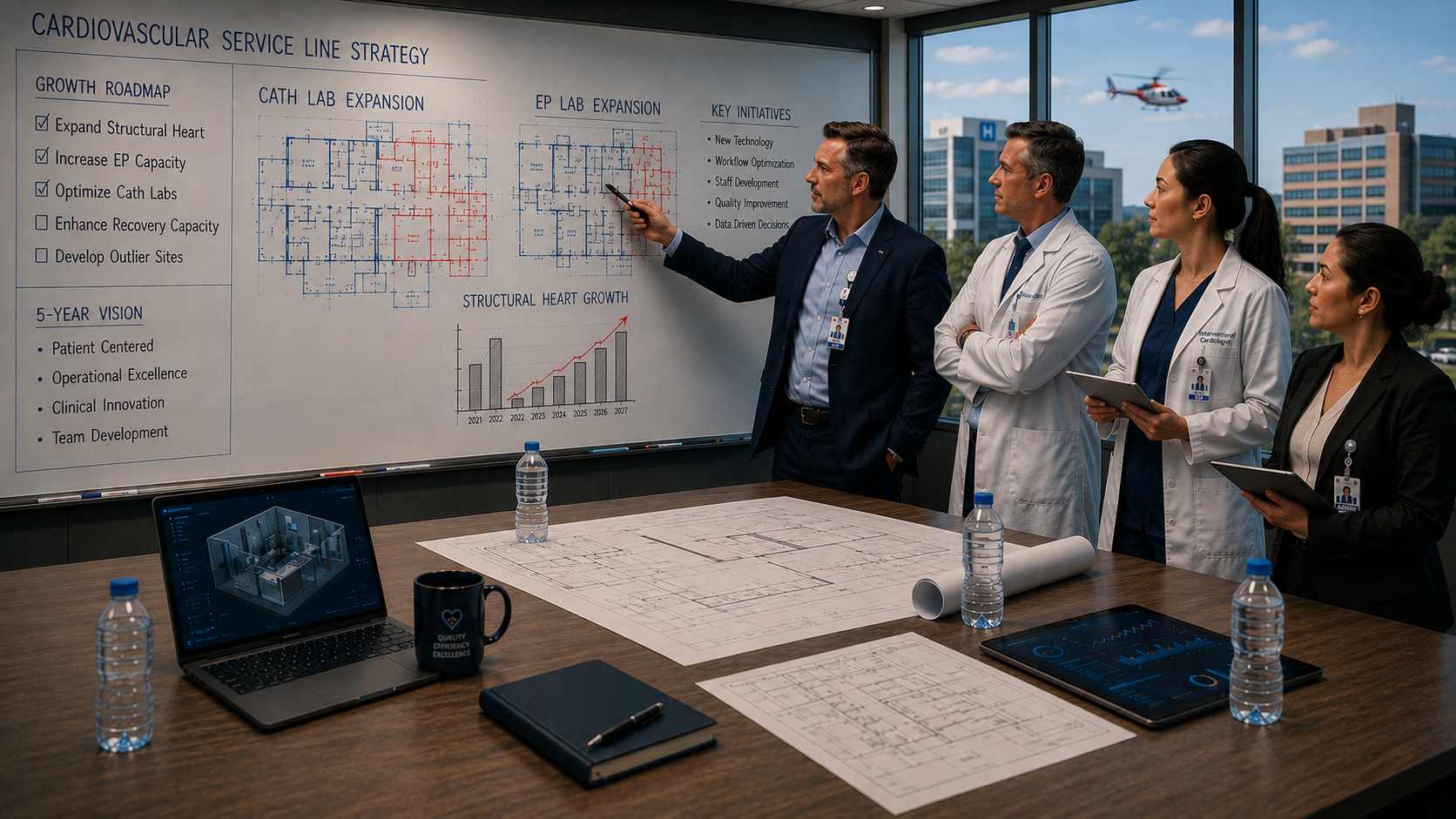
Exceptional cardiovascular programs are built through leadership that unites physicians, nurses, technologists, administrators, and support services around a shared commitment to clinical excellence, operational performance, and patient-centered care.
My leadership approach focuses on creating sustainable programs that strengthen clinical quality, improve operational efficiency, and develop high-performing teams prepared to meet the evolving demands of cardiovascular medicine. By combining strategic planning with frontline engagement, data-driven decision-making, and collaborative physician partnerships, I strive to build service lines that deliver outstanding patient outcomes while supporting long-term organizational growth.
-
Strong cardiovascular programs are built on visible, engaged leadership that extends beyond the office and into the clinical environment. I believe leaders should maintain an active presence alongside physicians, nurses, technologists, and support teams, fostering relationships built on trust, accountability, and open communication.
By remaining connected to frontline operations, I gain a better understanding of the challenges facing both staff and providers, allowing barriers to be addressed before they affect patient care or operational performance. This collaborative approach strengthens teamwork, encourages shared ownership of organizational goals, and creates an environment where individuals are empowered to contribute, innovate, and grow.
Leadership is ultimately about creating the conditions for others to succeed. By aligning multidisciplinary teams around a common vision, supporting professional development, and maintaining a relentless focus on quality and patient outcomes, I strive to build cultures that consistently deliver clinical excellence.
-
Successful cardiovascular programs do not evolve by chance—they are guided by clear vision, thoughtful planning, and disciplined execution. Program development requires balancing immediate operational needs with long-term strategic objectives while remaining responsive to advances in technology, changing clinical practices, and the needs of the communities we serve.
Throughout my career, I have been committed to building programs that strengthen clinical capabilities, improve access to advanced cardiovascular care, and support sustainable organizational growth. Whether expanding procedural services, implementing new technologies, optimizing workflows, or planning future initiatives, I believe every decision should contribute to a stronger, more integrated service line.
The most successful programs are those that continually adapt without losing sight of their mission. By combining strategic planning with physician collaboration, operational insight, and a commitment to continuous improvement, I work to develop cardiovascular programs that are positioned for long-term success while consistently delivering exceptional care to every patient.
-
Operational excellence is achieved when efficient processes consistently support exceptional patient care. Every workflow, every handoff, and every operational decision should contribute to a safer, more efficient experience for patients while allowing clinical teams to focus on what matters most.
I believe operational improvement begins with understanding the realities of frontline care. By evaluating workflows, identifying inefficiencies, and partnering with physicians and staff to implement practical solutions, organizations can improve throughput, optimize resource utilization, and enhance the overall patient experience without compromising quality or safety.
Sustainable operational performance requires continuous evaluation rather than one-time improvement initiatives. Through data-driven decision-making, measurable performance metrics, and a culture of continuous improvement, I strive to build systems that remain adaptable, accountable, and prepared to meet the evolving demands of cardiovascular medicine.
-
The success of any cardiovascular program is ultimately determined by its people. High-performing teams are developed through intentional leadership, meaningful professional development, and a culture that values collaboration, accountability, and continuous learning.
I believe every team member should understand not only their individual responsibilities, but also how their contributions support the broader mission of delivering exceptional patient care. By investing in mentorship, encouraging professional growth, and creating opportunities for leadership at every level, organizations strengthen both individual performance and long-term program stability.
Building exceptional teams requires consistency, transparency, and trust. When individuals feel supported, challenged, and empowered to succeed, they become engaged partners in achieving shared clinical and organizational goals. The result is a resilient team capable of adapting to change, embracing innovation, and delivering outstanding care for every patient, every day.
-
Exceptional cardiovascular programs are built on strong partnerships between physicians and hospital leadership. Establishing mutual trust, maintaining open communication, and working toward shared objectives creates an environment where clinical innovation and operational excellence can thrive together.
I believe physician engagement begins with listening. Understanding the perspectives of interventional cardiologists, electrophysiologists, cardiac surgeons, anesthesiologists, and advanced practice providers allows leaders to make informed decisions that support both clinical practice and organizational goals. By fostering collaborative relationships built on respect and transparency, challenges can be addressed proactively while opportunities for growth are identified together.
The most successful physician partnerships extend beyond daily operations. They become strategic relationships focused on expanding programs, improving patient outcomes, adopting new technologies, and advancing the long-term vision of the cardiovascular service line. Working collaboratively with physician leaders ensures that clinical excellence remains at the center of every decision.
-
A commitment to education is essential to the long-term success of any cardiovascular program. As clinical practices, technologies, and regulatory requirements continue to evolve, organizations must provide meaningful opportunities for continuous learning that strengthen both individual competency and overall program performance.
Throughout my career, I have viewed education as a strategic investment rather than a periodic requirement. Supporting continuing education, certification, cross-training, mentorship, and leadership development not only enhances clinical expertise but also improves engagement, retention, and succession planning. Well-developed teams are better prepared to adapt to change, adopt new technologies, and consistently deliver high-quality patient care.
I believe the strongest educational programs are integrated into the culture of the organization. By fostering collaboration with physicians, clinical specialists, industry partners, and professional societies, healthcare organizations can create sustainable learning environments that encourage innovation, support lifelong professional growth, and prepare the next generation of cardiovascular leaders.
-
Effective leadership requires informed decision-making. While experience and intuition remain valuable, the strongest strategic decisions are supported by meaningful data that measures performance, identifies opportunities, and guides continuous improvement.
I believe data should be used to understand the story behind operational performance rather than simply report numbers. Clinical quality metrics, operational dashboards, patient outcomes, throughput, resource utilization, and financial performance provide valuable insight when viewed collectively. By translating data into actionable strategies, leaders can make informed decisions that improve patient care, strengthen operational efficiency, and support organizational goals.
A culture of accountability begins with transparency. Sharing meaningful performance data with physicians, clinical teams, and organizational leadership fosters collaboration, encourages ownership, and creates a common understanding of priorities. When data is used as a tool for improvement rather than criticism, it becomes a catalyst for innovation, sustained growth, and long-term organizational success.
-
Healthcare is constantly evolving through advances in technology, changing regulatory requirements, and the growing complexity of patient care. Successfully navigating these changes requires thoughtful leadership that balances innovation with stability while maintaining a clear focus on quality, safety, and the needs of both patients and caregivers.
I believe meaningful change is achieved through collaboration rather than mandate. By engaging physicians, frontline staff, and organizational leaders early in the process, change becomes a shared initiative built on communication, transparency, and mutual trust. This approach encourages greater engagement, reduces resistance, and promotes long-term adoption of new processes and best practices.
Successful transformation is measured not only by implementation, but by sustained results. Through careful planning, continuous evaluation, and a willingness to adapt when necessary, I strive to lead initiatives that strengthen cardiovascular programs, improve operational performance, and create lasting value for the organizations and communities they serve.
-
The future of cardiovascular care will be shaped by organizations that embrace innovation, invest in their people, and remain committed to continuous improvement. As healthcare continues to evolve, successful programs must balance clinical excellence, operational efficiency, technological advancement, and financial stewardship while never losing sight of the patient.
My vision is to help build integrated cardiovascular service lines that are recognized not only for exceptional outcomes, but also for their culture of collaboration, professional development, and commitment to innovation. By aligning physicians, clinical teams, and organizational leadership around shared goals, healthcare organizations can create sustainable programs that adapt to changing demands while maintaining the highest standards of patient care.
Leadership is ultimately about leaving an organization stronger than it was before. Through strategic planning, thoughtful program development, and an unwavering commitment to excellence, I aspire to build cardiovascular programs that continue to grow, inspire future leaders, and serve their communities for years to come.
Professional Resources
Continue your professional development with these organizations and resources that support leadership, healthcare management, cardiovascular medicine, and quality improvement.